
Contact Lenses vs Glasses: Which Is Better for You?
When it comes to vision correction, one of the most common questions people ask is — Contact Lenses vs Glasses: Which Is Better for You? The answer is not the same for everyone. It depends on your daily lifestyle, eye health, comfort preferences, and budget. At Eyeheal, Dr. Kaushal Shah helps patients across Mulund and Mumbai make the right choice based on their specific needs. In this blog, we break down every factor so you can decide with confidence.
Understanding Your Vision Correction Options
Both glasses and contact lenses correct refractive errors such as myopia (short-sightedness), hyperopia (long-sightedness), astigmatism, and presbyopia. The core difference lies in how they are worn and how they interact with your eye. Glasses sit in front of your eyes and are supported by your nose and ears, while contact lenses rest directly on the surface of the eye. Each method has its own set of advantages and limitations that affect your comfort, vision quality, and overall eye health.
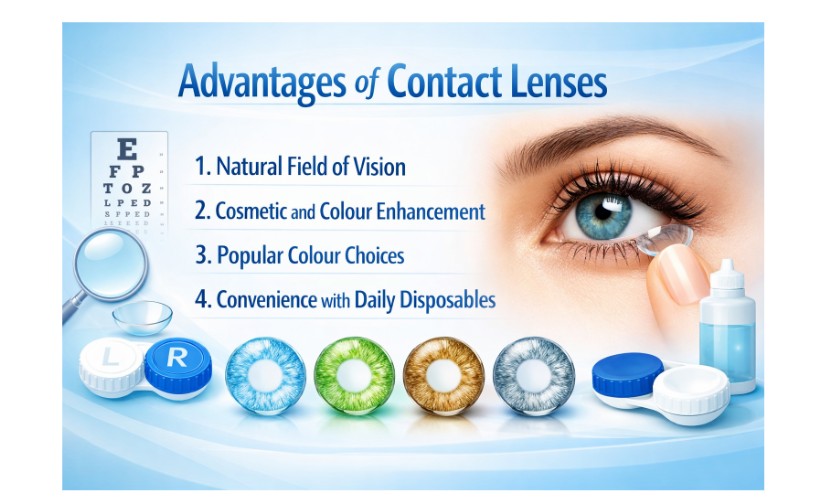
Advantages of Contact Lenses
1. Natural Field of Vision
Contact lenses move with your eyes and provide a wider, more natural field of vision. There are no frames to block your peripheral sight, which makes them ideal for sports, outdoor activities, and physically demanding jobs. Many patients at Eyeheal report feeling more confident and unrestricted when using contacts during workouts or events.
2. Cosmetic and Colour Enhancement
If you want to change or enhance your eye colour without altering your appearance with frames, coloured lenses are a fun and medically safe option. Freshlook coloured contact lenses are among the most popular choices for patients who want a natural-looking colour change with UV protection and a comfortable fit. Whether you prefer earthy tones or vivid shades, a professional fitting ensures both safety and the look you desire.
3. Popular Colour Choices
For those who want a subtle, elegant look, grey contact lenses are a top choice as they blend naturally with most Indian eye tones and look sophisticated in both indoor and outdoor lighting. Alternatively, patients who want a bolder, striking appearance often opt for blue contact lenses which are vibrant and popular for special occasions, photoshoots, and everyday style statements.
4. Convenience with Daily Disposables
Hygiene is a key concern with contact lenses. Daily disposable contact lenses address this perfectly — you use a fresh, sterile pair every single day and discard them at night. This eliminates the need for lens solutions, reduces the risk of eye infections, and is ideal for people who have a busy lifestyle, travel frequently, or are new to wearing contacts. Dr. Kaushal Shah at Eyeheal recommends daily disposables to most first-time lens users.
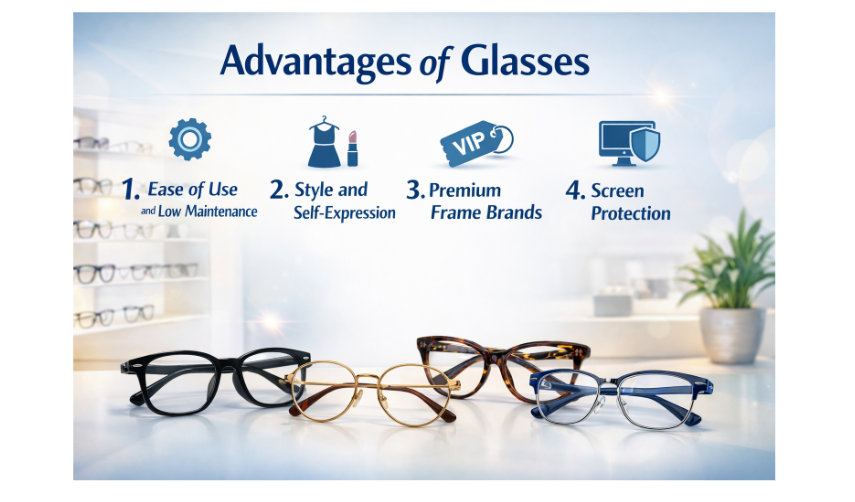
Advantages of Glasses
1. Ease of Use and Low Maintenance
Glasses are the simplest, most convenient form of vision correction. You put them on, take them off — no special hygiene routine required. They are ideal for people with dry eyes, sensitive corneas, or those who simply do not want the responsibility of daily lens care. Glasses also act as a physical barrier against dust, wind, and airborne particles, offering an added layer of eye protection.
2. Style and Self-Expression
Modern eyewear has become a major fashion accessory. Frames come in hundreds of styles, shapes, and colours. For men who want a classic, professional look, eye glass frames for men are available in lightweight metal, bold acetate, and rimless designs to suit every face shape and personality. Style-conscious patients at Eyeheal often enjoy browsing the frame collection as much as getting their prescription updated.
3. Premium Frame Brands
If you are looking for durable, stylish eyewear from a trusted brand, Titan eye glasses for men offer an excellent combination of quality craftsmanship, lightweight comfort, and contemporary design. These frames are known for their longevity and wide availability, making them a reliable choice for everyday wear across all age groups.
4. Screen Protection
With increasing screen time due to remote work and digital lifestyles, eye strain has become a growing concern. Laptop glasses for eye protection feature anti-reflective coatings and blue-light filtering lenses that reduce the harmful effects of prolonged screen exposure. These specialised glasses help reduce headaches, eye fatigue, and sleep disruption — a must for IT professionals, students, and anyone working long digital hours.
Quick Comparison: Contacts vs Glasses
Factor | Contact Lenses | Glasses |
Field of Vision | ✔ Full, unrestricted | Slightly limited by frame |
Maintenance | Requires daily care | ✔ Minimal maintenance |
Active Lifestyle | ✔ Ideal for sports | May slip or fog |
Eye Infection Risk | Higher if hygiene lapses | ✔ Very low risk |
Cosmetic Options | ✔ Colour lenses available | Frame style variety |
Screen Protection | Limited | ✔ Blue-light filter available |
Ongoing Cost | Moderate to high | ✔ Lower long-term cost |
Best For | Active, style-conscious users | ✔ Everyone, especially beginners |
Understanding Contact Lens Costs
One of the first questions patients ask is about contact lenses price The cost varies depending on the type — daily disposables tend to cost more per pair but save money on solutions and cases. Monthly or quarterly lenses are more economical upfront but require lens care products. Coloured lenses, specialty lenses, and premium brands naturally carry higher price points. At Eyeheal, Dr. Kaushal Shah's team helps patients understand all pricing options and select a lens that fits both their prescription and their budget.
Essential Contact Lens Care Tips
Wearing contact lenses responsibly is crucial for maintaining good eye health. Always wash and dry your hands before inserting or removing lenses. Never sleep in lenses unless they are specifically designed for overnight use. Use only recommended eye drops for contact lenses to keep your eyes lubricated throughout the day — regular eye drops may contain preservatives that are not safe for contact lens wearers. Replace lenses strictly as per schedule and never share lenses with anyone, even briefly.
- Store lenses in fresh solution every night — never reuse old solution.
- Replace your lens case every 30 days to avoid bacterial buildup.
- Visit your eye doctor at least once every 6 months when wearing lenses regularly.
- Immediately remove lenses and consult a doctor if you experience redness, pain, or blurred vision
Conclusion: What Should You Choose?
The choice between contact lenses and glasses ultimately comes down to your personal lifestyle and medical needs. If you value convenience, minimal upkeep, and eye protection from screens, glasses may be the ideal pick. If you are active, prefer a glasses-free look, or want the flexibility of colour options, contact lenses offer fantastic benefits when used correctly. For many patients, using both — glasses at home and contacts when going out — is the most practical solution.
Whatever you choose, always prioritise regular eye check-ups. At Eyeheal in Mulund, Dr. Kaushal Shah provides comprehensive eye examinations, personalised lens fittings, and trusted guidance for patients of all ages. Book your consultation today and take the first step toward clear, comfortable, and healthy vision.
Frequently Asked Questions (FAQ)
Q1. Can I wear contact lenses every day?
Yes, most people can wear contacts daily. However, it is important to follow the recommended wearing schedule, maintain proper hygiene, and give your eyes regular rest from lenses. Always consult Dr. Kaushal Shah at Eyeheal before starting daily wear.
Whatever you choose, always prioritise regular eye check-ups. At Eyeheal in Mulund, Dr. Kaushal Shah provides comprehensive eye examinations, personalised lens fittings, and trusted guidance for patients of all ages. Book your consultation today and take the first step toward clear, comfortable, and healthy vision.
Q2. Are coloured contact lenses safe?
Coloured lenses are safe when prescribed and fitted by a qualified eye care professional. Never buy coloured lenses without a prescription — improperly fitted lenses can cause corneal damage and infections.
Q3. Which is better for children — glasses or contacts?
For children below the age of 12, glasses are generally recommended as they are safer and easier to manage. Teenagers may be considered for contact lenses with proper supervision and after assessment by an eye doctor.
Q4. Can I wear glasses after cataract surgery?
Many patients need glasses for near or distance vision after cataract surgery depending on the lens implanted. Your surgeon at Eyeheal will advise you on the right vision correction post-operation.
Q5. How much do contact lenses cost per month?
Costs depend on the brand, type, and frequency. Daily disposables typically cost more monthly than bi-weekly or monthly lenses. At Eyeheal, patients receive personalised recommendations that balance quality and budget.